Identifying and Repairing a Water Leak in Your Garden or Driveway
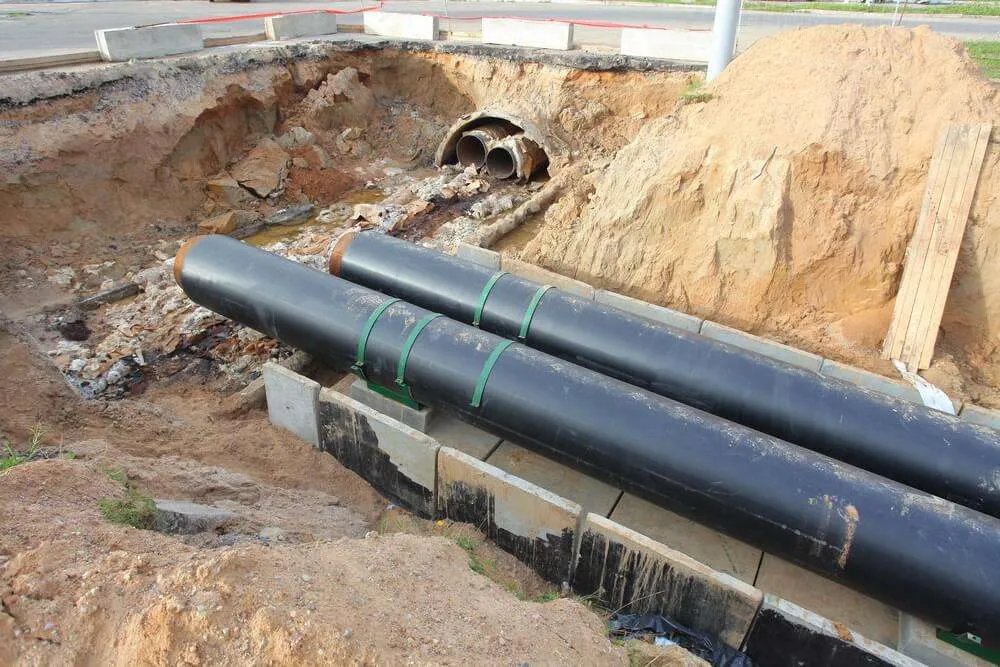
Subsurface water leaks in gardens and driveways require precise, non-invasive detection methods. We detail the technical signs and the specialist equipment used for accurate location and minimal-dig repair.
Technical Indicators of a Subsurface Leak
Identifying a water leak beneath a paved driveway or within a garden's soil matrix requires observation of specific, often subtle, indicators. Unlike internal leaks, these present as unexplained areas of persistent saturation or muddiness in a garden bed, even during dry weather. On driveways, you may observe consistent damp patches, moss growth along specific lines, or areas where frost or ice patterns differ from the surrounding surface. A sudden, unexplained increase in metered water consumption is often the primary data point that confirms a leak is occurring, though it does not pinpoint the location. These symptoms indicate a breach in the supply line, typically between the stop tap and the property's internal entry point, or within an external branch line serving an outbuilding or tap.
Precision Leak Detection Methodologies
Our engineers employ a suite of non-invasive technologies to locate leaks with minimal disruption. Acoustic correlation is a primary method for pressurised mains; sensitive ground microphones and correlators analyse the sound frequency of the leak from two contact points to calculate its precise position. For non-metallic pipes or complex layouts, tracer gas detection is highly effective. We introduce a harmless hydrogen-based gas mix into the pipe; it escapes at the leak point and is detected by sensitive probes at the surface, even through concrete or compacted sub-base.
Thermal imaging cameras provide a visual complement, identifying temperature differentials caused by escaping water. This is particularly useful for mapping the extent of saturation or confirming a leak under a driveway slab. Before any excavation, we use electromagnetic pipe locators to trace the exact path and depth of the service pipe, ensuring our investigation is targeted. This multi-method approach guarantees location accuracy, confining any necessary excavation to a minimal area.
Targeted Repair Strategies for Landlords & Commercial Properties
For property managers and commercial clients, the priority is a durable repair that minimises tenant disruption and restores the integrity of the hardscape. Once precisely located, our repair strategy is dictated by the pipe material and the site's constraints. For accessible sections, a direct repair or section replacement is performed. In many cases, especially under driveways, a trenchless 'patch and line' repair or a resin-based internal sealant can be a viable solution, avoiding large-scale excavation and reinstatement costs.
We always conduct a post-repair pressure test to verify the integrity of the fix. For landlords, a detailed report documenting the leak's location, cause, and repair method is provided for maintenance records. For commercial sites, we can coordinate reinstatement of tarmac, block paving, or landscaping to return the area to its pre-leak condition, ensuring compliance with site safety and aesthetic standards.
Frequently asked questions
What is the most accurate method for finding a leak under a concrete driveway?
A combination of tracer gas detection and acoustic correlation typically yields the highest accuracy. Tracer gas escapes the pipe and rises through the slab, where it is detected at the surface. Acoustic correlators then pinpoint the exact leak point along the pipe's traced path, allowing for a very targeted excavation.
Can a garden leak affect my property's foundation?
Yes. Prolonged, concentrated saturation from a leaking supply pipe can undermine stable soil conditions, leading to subsidence or movement, especially in clay soils. Precise early detection and repair prevent long-term structural water damage and stabilise the ground.
Do you have to dig up my entire driveway to fix the leak?
No. Our precision detection methods are designed to avoid this. By identifying the leak's exact coordinates, we perform a minimal-dig repair, often excavating only a small inspection pit. Trenchless lining techniques may also be an option, further reducing surface disruption.