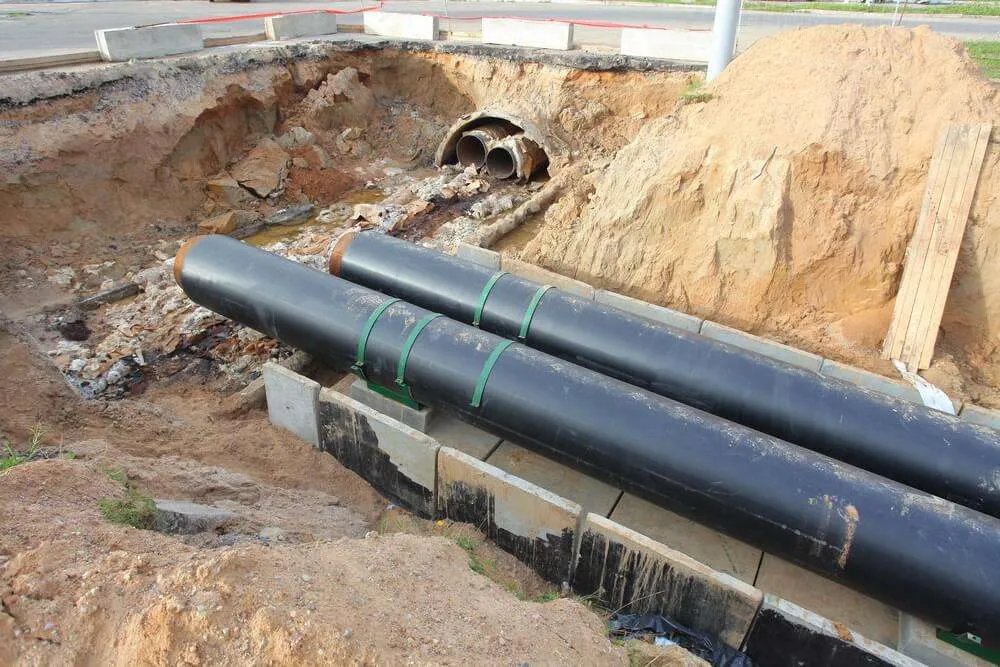
Determining responsibility for an underground water supply pipe leak depends on the precise location of the breach relative to the property boundary and the communication pipe.
The Demarcation Point: Understanding the Communication Pipe
Responsibility for an underground water supply is legally divided at a specific point known as the boundary stop tap or external stop valve. The pipe from the water main in the street to this point is the 'communication pipe', which remains the responsibility of the water utility company. From this valve into your property, including the 'supply pipe' running underground to the building, is the responsibility of the property owner or landlord. The first critical step in any leak investigation is to precisely locate this demarcation point, as it defines the financial and repair liability.
Pinpointing the Leak: Technical Detection for Liability
To establish responsibility, the exact location of the leak must be identified with technical precision. Our engineers employ a suite of non-invasive methods to achieve this. Acoustic leak detection uses sensitive ground microphones and correlators to listen for the distinct sound of pressurised water escaping, allowing us to triangulate the breach without excavation. Tracer gas detection, involving the introduction of a harmless hydrogen-based gas into the pipe, is highly effective for pinpointing leaks under slabs or in non-metallic pipes, as the gas escapes at the leak point and is detected at the surface. Thermal imaging cameras can also reveal subtle temperature differences in the ground caused by leaking water, providing visual evidence of the problem area.
Only after this technical survey can a definitive statement on responsibility be made. If the breach is found on the communication pipe side of the boundary stop tap, the water company is liable. If it is on the supply pipe side, the property owner is responsible for the repair and for any water loss charges up to the meter. For landlords, this repair cost typically falls to them, not the tenant, unless the tenancy agreement states otherwise or the leak was caused by tenant negligence.
Commercial and Landlord Considerations
For commercial properties and multi-tenant buildings, the situation can be more complex. Supply pipes may feed multiple premises, and responsibility may be shared via a formal agreement. A precise leak location survey is therefore essential not just for repair, but for apportioning costs correctly. Furthermore, undetected underground leaks lead to significant water loss, structural subsidence risks from soil erosion, and unexpectedly high utility bills. For landlords, proactive leak detection surveys as part of property maintenance can identify weaknesses before a catastrophic failure, protecting the asset and preventing disputes over responsibility and water damage liability with tenants.
Once responsibility is confirmed, our engineers can provide a detailed report of the leak location and recommended repair method, which is often a minimal-excavation, engineered patch repair or a section replacement using modern trenchless technology where possible. This report serves as vital documentation for liaising with water companies or for managing insurance claims related to the damage caused by the leak.
Frequently asked questions
How can I find my boundary stop tap to understand responsibility?
The boundary stop tap is typically located at or near the property boundary, often in a small chamber under a metal cover marked 'water' or 'stop tap'. If you cannot locate it, your water utility company can provide guidance, and our engineers use pipe tracing equipment to definitively trace the supply line from the internal stop tap to the legal demarcation point.
What detection method is best for an underground leak under a concrete driveway?
For leaks under non-porous surfaces like concrete or asphalt, tracer gas detection is often the most precise method. The inert gas permeates through the leak path to the surface, where it is detected with specialist sensors, allowing for exact pinpointing with minimal intrusive investigation. Acoustic correlation can also be effective if there are accessible connection points on either side of the slab.
As a landlord, am I responsible for the water bill if there is an underground leak on my supply pipe?
Yes, generally the property owner is responsible for all water consumption recorded by the meter, including that lost through a leak on the supply pipe. It is crucial to arrange for a professional leak detection and repair promptly. Some water companies may offer a leakage allowance for repaired leaks, but this is not guaranteed and requires proof of a timely repair.