Hydrostatic Pressure Testing
Swimming Pool Leak Detection London
Pool leaks compromise structural integrity and waste significant water. For concrete pools common in London's larger residential gardens and commercial facilities, we deploy specialised acoustic listening devices along the pool shell and hydrostatic pressure testing to pinpoint the source without excavation.
Quick answer
Pool leaks are found by pressure-testing the pipe lines, dye-testing the shell and fittings, and inspecting the structure. This isolates whether water is escaping through the plumbing, the pool structure, or the fittings. Typical UK trade cost-guide ranges run from around £150 to £600 depending on method and pool type.
Swimming pool leak detection costs in London
| Job | Typical cost | Time |
|---|---|---|
| Bucket and dye test visit | £120 to £220 | 1 to 2 hours |
| Pressure test of pool lines | £180 to £350 | 2 to 3 hours |
| Structural shell inspection | £200 to £450 | 2 to 4 hours |
| Indoor pool survey | £250 to £500 | half day |
| Dive inspection | £300 to £600 | half day |
Typical UK trade cost-guide ranges, not a quote. Our detection fee is fixed and agreed at booking.
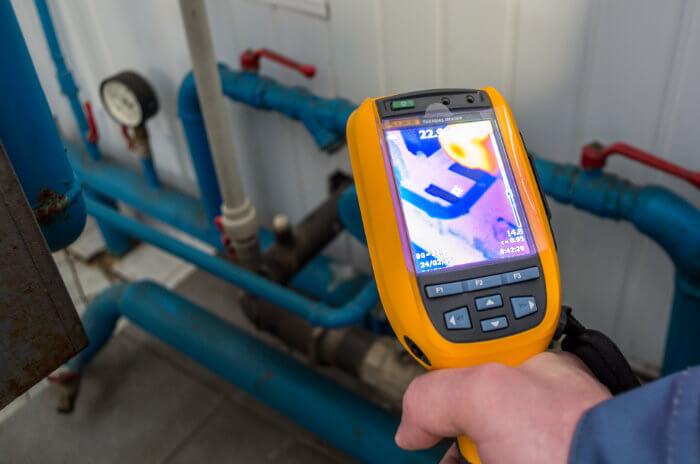
Fibreglass or vinyl liner pools, often found in compact urban gardens or apartment complexes, are better served by pressure testing of individual lines and thermal imaging to reveal temperature differentials caused by escaping water within the surrounding structure.
Our methodology is determined by your pool's specific construction, its hydraulic system complexity, and the suspected leak location, ensuring a precise diagnostic outcome before any corrective work begins.
Pricing is based on the diagnostic method required for your pool's construction and size, and the complexity of its hydraulic system. We provide a fixed-quote following a brief initial assessment.
What you get
- High-sensitivity hydrophones detect the specific acoustic signature of water escaping under pressure from concrete.
- Digital correlators analyse sound waves from multiple sensors to mathematically pinpoint the leak location.
- Thermal imaging cameras visualise cool spots indicating water seepage behind fibreglass shells or tile work.
- Dye testing and pressure decay analysis isolate leaks in plumbing lines independent of the main vessel.
- Real-time moisture mapping for surrounding decking or foundations assesses secondary water damage risk.
- Comprehensive report with diagnostic imagery and recommended repair scope for contractors or insurers.
How it works
A method, not a guess
01
Hydraulic System Analysis
We isolate and pressure-test the pool's plumbing lines separately from the shell to determine if the leak is structural or within the pipework.
02
Method Selection & Deployment
Based on construction, we deploy acoustic or thermal equipment. For concrete, acoustic correlators are placed on the shell; for liners, thermal cameras scan the interior.
03
Precision Location
Equipment provides a defined location, often to within a few square feet, eliminating unnecessary exploratory excavation or tile removal.
04
Verification & Reporting
We verify the finding with a secondary method, such as a dye test, and provide a technical report with imagery detailing the exact cause and location.
Before you book anyone
Six things to know before you book swimming pool leak detection in London
01
Run the bucket test before you pay anyone
A healthy outdoor pool in a UK summer can lose up to 6mm a day to evaporation alone; SPATA's guide figure for an uncovered indoor pool is around 3mm per 24 hours. Before booking a survey, stand a bucket of pool water on the top step, mark both levels, and compare after 24 hours. If the pool drops noticeably more than the bucket, you have a genuine leak. Repeat the test with the pump off: if the loss slows or stops, the problem is almost certainly in the plumbing rather than the shell. That one detail saves a surveyor hours and stops you paying to confirm normal evaporation.
02
A pool maintenance company is not a leak detection specialist
The firm that services your filter is rarely equipped to trace a leak in buried pipework. Without tracer gas, acoustic gear and per-circuit pressure rigs, the honest options left are guesswork: swapping seals, replacing skimmer parts, re-grouting, and charging for each attempt. Homeowners routinely spend hundreds on part-swapping before anyone actually locates the leak. Ask directly: what detection equipment do you carry, and will you pressure test each pipe run separately? If the answer is a dye bottle and a hunch, keep looking.
03
Understand what an open-ended day rate really buys
Checkatrade puts UK water leak detection at £80–£1,600 with an average around £500, and tracer gas work alone is quoted anywhere from £250 to £2,000. Pool surveys usually take a full day, often with two engineers, so an £80–£120 hourly rate compounds fast — and few firms will say in writing what happens if day one ends without an answer. Get the total figure, in writing, before anyone arrives. We charge a fixed detection fee agreed at booking, backed by a genuine no-find-no-fee, so the number cannot grow mid-survey.
04
Most pool leaks are fittings, not the shell
The frightening diagnoses — cracked shell, full re-render, new liner — are the rarest. In practice the usual culprits are skimmer throats, light niches and their conduits, return fittings, steps and the pipework between pool and plant room. Be sceptical of any verdict of structural failure reached without dye testing every fitting and pressure testing every circuit first, because re-lining a pool that is actually leaking at a £40 skimmer gasket is an expensive way to not fix the problem. A methodical survey rules out the cheap causes before anyone mentions the dear ones.
05
Never let anyone dig before the leak is pinpointed
Excavating buried pool pipework on suspicion is the most expensive mistake in this trade. A straightforward underground pipe repair in the UK runs roughly £220–£440, but exploratory digging under patios, decking or landscaping can multiply that several times over — and reinstatement is rarely included in the quote. Insist on tracer gas and per-circuit pressure testing to isolate the exact run and position first, so any excavation is a single, targeted hole. If a contractor proposes trial digs as step one, that is your cue to get a second opinion.
06
Check the report before you book, not after
If water from the pool or its pipework has damaged your home, your insurer will want a proper trace and access report: cause, origin, method used, moisture readings and photographs. Loss adjusters routinely push back on a scribbled invoice that says "found leak, repaired" — and UK policies distinguish sudden escapes of water from gradual seepage, so vague wording can sink a claim. Ask any firm to show you a sample report before booking. Ours are structured for UK loss adjusters and issued within 48 hours of the survey.
Compare like for like
Swimming Pool Leak Detection Across London
Losing water from a London pool can mean a cracked shell, a failing fitting, or a split pipe underground, and each needs a different fix. We locate the source methodically before anyone reaches for a shovel, so you repair the actual fault rather than draining, digging, and hoping the loss stops.
| What to check | A cheap hourly quote | A guess-and-drain firm | London Leak Specialist |
|---|---|---|---|
| Pressure testing the lines | Rarely offered at the headline rate; pipework is often skipped so a suction or return line leak goes unfound. | May test one line quickly, but often jumps to draining before the plumbing is properly isolated and checked. | We pressure test suction, return and cleaner lines separately, isolating each circuit to confirm exactly which pipe is losing water. |
| Dye testing the structure | Usually not included; without dye work a hairline shell or fitting leak is easily missed on a quick visit. | Relies mainly on watching the water drop, which shows loss but not where the water is actually escaping. | We use dye at fittings, lights and suspect cracks with the pump off, watching where dye draws to pinpoint the leak. |
| Structure vs plumbing vs fittings | Little attempt to separate causes, so you may pay for a repair that does not match the real fault. | Tends to assume one cause and drain, missing whether the loss is shell, buried pipe or a worn fitting. | We distinguish shell and bond-beam cracks, underground pipe faults and worn fittings, so the right trade fixes the right thing. |
| Indoor pool humidity risk | Structural and damp implications of an indoor leak are seldom assessed within a low fixed price. | Focus stays on the pool water, overlooking moisture tracking into surrounding floors, walls and plant rooms. | For indoor pools we check where escaping water and humidity may reach structure and finishes, flagging damp risk beyond the pool itself. |
| Avoiding needless draining | May drain by default because it is quicker than diagnosing, leaving you refilling and reheating at your cost. | Draining is often the core method, risking shell movement and hydrostatic damage when the water table is high. | We diagnose with the pool full wherever possible, draining only when testing genuinely requires it and the risks are explained. |
| Pricing model | An hourly rate that looks low but grows as untargeted testing and repeat visits stretch the job out. | Bundled drain-and-inspect pricing that can rise sharply once excavation or refilling is added on. | Clear scoped pricing within typical UK trade cost-guide ranges, agreed before work, so you know what detection covers. |
| No-find-no-fee approach | Rarely offered; you can pay the full hourly bill even when nothing conclusive is located. | Payment often tied to the drain and inspection regardless of whether the leak is actually identified. | If we cannot locate the leak on a standard detection visit, you do not pay the detection fee, keeping the risk with us. |
| Reporting and next steps | Findings are often verbal and vague, leaving you unsure what to repair or who should carry it out. | Report tends to justify the drain rather than clearly mapping the fault and repair options. | You receive a plain written summary of the fault, its likely cause and the sensible repair route to follow. |
From the forums
What Londoners say on Reddit & forums
Pool owners on Reddit and UK homeowner forums are blunt about this niche: most wish they had tested for evaporation first, and many learned the hard way that a pool serviceman and a leak specialist are not the same thing.
On pool-owner subreddits, people shocked by how much water loss is normal
The most repeated exchange in pool communities is someone alarmed by a falling water line being told to do the bucket test before spending a penny. Regulars point out that a quarter inch a day in warm, breezy weather is unremarkable, and that wind and uncovered water do more damage than most owners expect. Plenty of posters return to admit the bucket matched the pool and there was no leak at all. Our take: we ask every caller about their bucket test result first — it is the difference between booking a survey you need and one you do not.
On r/DIYUK and pool forums, owners burned by part-swapping pool companies
A recurring frustration is the maintenance firm that responds to water loss by replacing components one at a time — a skimmer gasket this visit, a multiport valve the next — each with its own invoice, while the pool keeps dropping. The consensus is that general pool servicing and leak tracing are different skills, and that a dedicated detection survey usually ends the guessing in one visit. Our take: diagnosis should come before parts; a per-circuit pressure test tells you in an hour what months of part-swapping never will.
Owners discussing auto top-up systems quietly hiding leaks for months
Several threads feature owners who only discovered a leak when a water bill arrived hundreds of pounds heavier, because an automatic fill valve had been topping the pool up invisibly all season. The community advice is to switch the auto-fill off periodically and watch the level for 24–48 hours, and to treat any unexplained bill spike as a prompt to test. Our take: auto-fill masks the symptom while water saturates the ground around the pool, so the earlier the level check, the cheaper the eventual repair.
On UK forums, homeowners disputing insurance claims for gradual leaks
Threads on UK money and housing forums about escape-of-water claims keep hitting the same wall: policies pay for sudden events but often exclude gradual seepage, and adjusters reject claims where the paperwork does not clearly establish cause and origin. Posters who succeeded credit a proper trace and access report; those who failed usually had only a contractor's brief invoice. Our take: the report is not an add-on, it is the evidence — ask what yours will contain before the survey, not after the claim is refused.
Pool owners comparing quotes for tracing leaks in buried plant pipework
When the suspected leak sits in the pipe runs between pool and plant room, forum users report wildly divergent quotes — from a few hundred pounds for a pressure test to thousands where a firm proposed digging first and diagnosing second. The settled advice is to pay for pinpointing before anyone lifts a slab, because reinstatement of patios and landscaping is where costs explode. Our take: tracer gas and correlation can place a buried pipe leak within a spade's width, which is exactly what turns a £2,000 excavation into a single targeted hole.
Questions
Asked before every booking
What method is best for a gunite pool in a Chelsea garden?
For reinforced concrete (gunite) pools, acoustic correlation is primary. Sensors placed on the shell detect the sound of pressurised water escaping through cracks. This non-invasive method is precise for complex shell geometries common in period London properties.
Can you find a leak in a fibreglass pool without draining it?
Yes. Thermal imaging is effective on filled fibreglass pools. Escaping water creates a localised temperature differential against the shell, visible to our FLIR cameras. We complement this with pressure testing of the skimmer and return lines.
How do you differentiate between a shell and plumbing leak?
We perform a static water level test on the isolated pool shell. If the level drops with all plumbing sealed, the leak is structural. Concurrent pressure decay testing of the plumbing lines provides a definitive diagnosis for each system.
What equipment is used for leaks under mosaic tile?
High-frequency acoustic listening devices are most effective, as they can detect the high-pitch sound of water passing through fine cracks beneath hard tile surfaces. Thermal imaging may also reveal moisture patterns behind the tile bed.
Why is tracer gas not your primary method for pools?
Tracer gas (helium) is excellent for pressurised pipework but less optimal for large-volume, low-pressure pool shells. Water-based acoustic and thermal methods provide faster, more direct location for the vessel itself, which is the most common leak source.
How much does swimming pool leak detection cost in London?
Checkatrade puts UK water leak detection at £80–£1,600, averaging around £500, with tracer gas work quoted from £250 to £2,000. Pool surveys typically take a full day, so open-ended hourly rates of £80–£120 add up quickly. We quote a fixed detection fee agreed at booking, covered by a genuine no-find-no-fee, with any repair quoted separately before work starts.
How do I know if my pool is leaking or just evaporating?
Do the bucket test. Fill a bucket with pool water, stand it on the top step, mark both water levels and compare after 24 hours. Evaporation affects both equally — a UK pool can lose 3–6mm a day normally — so if the pool drops noticeably more than the bucket, it is leaking. Repeat with the pump off: if loss slows, the leak is in the plumbing.
Where do most swimming pool leaks occur?
Usually at fittings rather than the pool shell: skimmer throats, light niches and their conduits, return inlets, steps and the buried pipework between the pool and plant room. Genuine structural cracks are comparatively rare. That is why a proper survey dye-tests every fitting and pressure tests each pipe circuit separately before anyone suggests expensive work such as re-lining, re-rendering or excavation.
How long does swimming pool leak detection take?
Most domestic pool surveys are completed within a single working day. The engineer pressure tests each pipe circuit individually, dye tests fittings such as skimmers and lights, and uses tracer gas and acoustic equipment on any buried runs that fail. Complex sites — indoor pools, long buried pipework or restricted access — can occasionally need a follow-up visit, which should be agreed and priced before it happens.
Does home insurance cover a swimming pool leak?
It depends on your policy. Buildings cover often extends to damage caused by a sudden escape of water, and trace and access cover can pay the cost of locating the leak — but gradual seepage is commonly excluded, and outdoor pools or their pipework are not covered on every policy. Check your wording, then make sure any survey produces a full trace and access report, as loss adjusters routinely reject undocumented claims.
London-wide
Covering all 33 boroughs
Related services
Underground Leaks
Correlators and ground microphones fix a buried supply leak to a single point beneath London gardens, drives and slabs, before anything is excavated.
Learn moreTracer Gas
Hydrogen and nitrogen tracer gas reaches what sound cannot: screeded UFH loops, buried supply runs and low-pressure pipework in London buildings.
Learn moreLeak Detection
The method follows the building, not the price list: acoustic correlation on mains, thermal on heating runs, tracer gas where neither will reach.
Learn moreWater going somewhere it shouldn’t?
Tell us the symptoms and your postcode. We’ll confirm the visit, the fixed detection fee and the arrival window before you commit to anything.
Book a detection visit