Underfloor Heating Leak Detection: Signs, Diagnosis, and Precision Repair
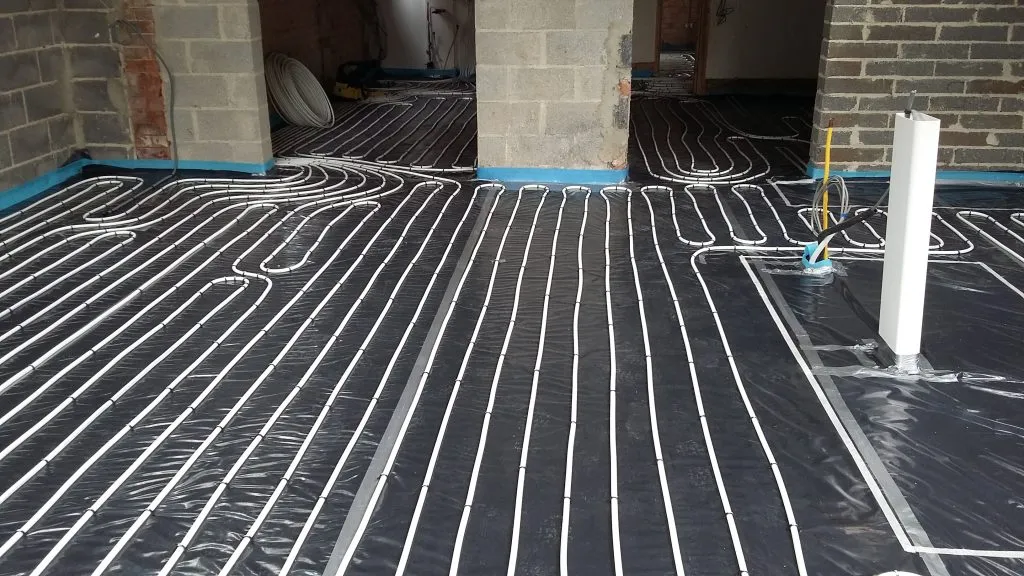
Detecting and repairing an underfloor heating leak requires precise diagnostics, including thermal imaging and pressure testing, to locate the breach without unnecessary floor damage.
Identifying the Subtle Signs of a System Breach
Unlike conventional radiator systems, underfloor heating (UFH) leaks are often concealed and manifest indirectly. The primary indicator is a persistent pressure drop in the system's manifold gauges. A system that requires frequent repressurisation likely has a leak. Visible signs include localised damp patches or a musty smell emanating from a specific floor area, though these often appear only after significant leakage. Another key symptom is uneven heating, where one zone fails to warm properly while others function normally. For landlords and facility managers, unexplained increases in water usage or boiler cycling can also point to a hidden leak in a commercial or multi-tenant property.
Precision Diagnostic Methodologies
Pinpointing a leak within a screed-embedded pipe demands non-invasive technology to minimise investigative damage. Our engineers employ a staged diagnostic approach. First, we conduct a thorough static pressure test to confirm the leak and isolate the affected circuit at the manifold. Following isolation, we use advanced acoustic listening devices to detect the sound of water escaping under pressure. For leaks not audible through acoustic means, thermal imaging cameras are deployed. These cameras visualise temperature differentials in the floor surface, often revealing the wet patch's cooler thermal signature as water evaporates. In complex cases, we may inject a trace gas into the pipework, which, being lighter than air, will permeate through the screed to the surface, where sensitive detectors locate the exact breach point.
This methodical, technology-led process allows us to identify the leak coordinates with high accuracy before any floor covering is lifted. It is a critical step for commercial settings where business disruption must be minimised and for landlords responsible for multiple properties, ensuring repairs are targeted and cost-effective.
Targeted Repair and System Integrity Restoration
Once the leak location is precisely mapped, we execute a minimally invasive repair. For accessible pipes in perimeter zones, a small section of screed is carefully removed to expose the pipe. The damaged section is cut out and replaced using manufacturer-approved fittings, ensuring compatibility with the existing pipe material, whether PEX, PERT, or PB. The repair is then pressure-tested in isolation before the screed is reinstated. In all cases, we conduct a final integrity test on the entire repaired circuit to verify there are no secondary leaks and that the system pressure remains stable.
Post-repair, it is essential to commission the system correctly. This involves a controlled purge to remove any air introduced during the repair and a careful balancing of the manifold to ensure even flow and heat distribution across all zones. For landlords, we provide a detailed report documenting the leak location, diagnostic method used, repair undertaken, and final test results, which is vital for asset management and future reference.
Proactive Monitoring and Maintenance
Prevention is superior to repair. We recommend an annual pre-winter system check, which includes inspecting manifold pressure gauges, testing pressure relief valves, and checking for any early signs of corrosion or wear on above-ground components. Installing automatic pressure monitoring devices can provide early warnings of minor drops indicative of emerging leaks. For commercial properties with extensive UFH installations, a scheduled thermal survey can establish a baseline heat map, making future anomaly detection faster and more reliable.
Frequently asked questions
Can a thermal imaging camera always find an underfloor heating leak?
Thermal imaging is highly effective but not infallible. It detects temperature differences caused by evaporating water. Its success depends on factors like floor construction, leakage rate, and the time since the leak started. It is often used in conjunction with acoustic listening and pressure testing for a definitive diagnosis.
How disruptive is the repair process to my property or business?
Our precision detection aims to limit disruption. By accurately locating the leak before any excavation, we minimise the area of floor that needs to be opened. The repair itself is localised, and reinstatement of screed and floor coverings can be managed efficiently. For commercial operations, we plan work to occur during off-hours or in phases to reduce operational impact.
What causes underfloor heating pipes to leak?
Common causes include installation damage (e.g., a nail or screw piercing a pipe during later works), corrosion from incompatible metals in older systems, manufacturing defects, or stress from thermal expansion and contraction over time. In screeded systems, movement or settlement of the substrate can also occasionally lead to joint failure or pipe fatigue.