Cold Spots in Underfloor Heating: Causes & Technical Fixes
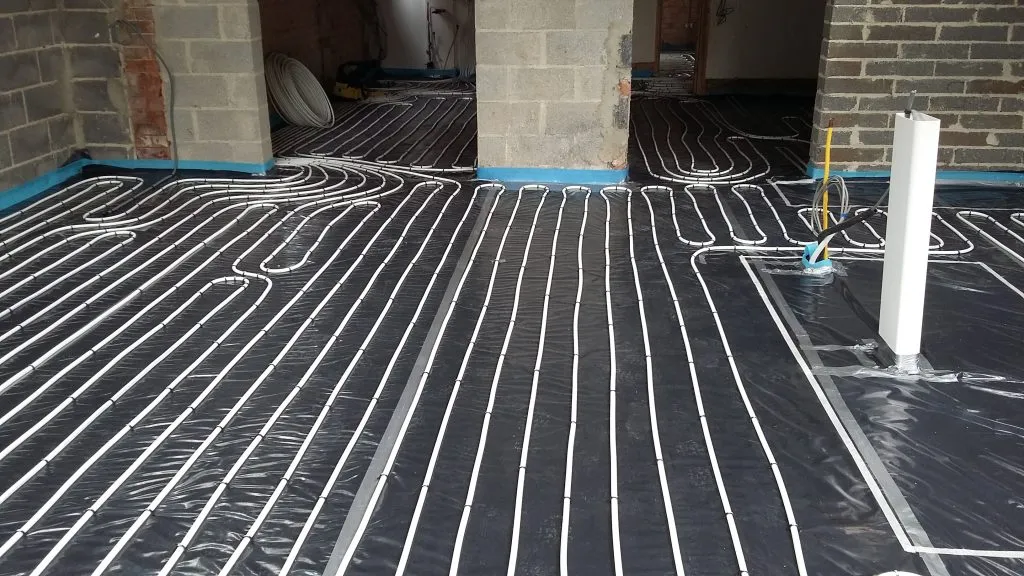
Cold spots in underfloor heating systems are a precise indicator of underlying faults, from pipe leaks to air locks. We detail the technical diagnostics and repair methodologies.
Technical Interpretation of Underfloor Heating Cold Spots
Cold or unevenly heated zones in an underfloor heating (UFH) system are a clear technical symptom, not a fault in themselves. For landlords and commercial property managers, these patterns on the floor surface are a primary diagnostic clue. They indicate a disruption in the designed flow rate or thermal conductivity within the pipe loops. Our approach is to treat the symptom as a precise guidepost, leading us to one of several core mechanical or hydraulic failures.
Primary Causes: A Systems Analysis
The most frequent technical causes fall into distinct categories. A leaking pipe within the screed is a primary concern; even a minor leak lowers system pressure and flow, starving downstream loops. This often manifests as a growing cold area. Air pockets or ‘air locks’ within a loop act as an insulator, preventing heat transfer and are a common cause after system refilling. Flow restrictions, caused by sludge buildup (magnatite) or a faulty manifold actuator, create an imbalance where some loops receive insufficient hot water. Finally, compromised insulation or incorrect pipe spacing during installation can create inherent cold zones, though these are typically consistent from commissioning.
Precision Diagnostic and Repair Methodologies
Our engineers employ a sequential diagnostic protocol. We first analyse the system pressure and flow rates at the manifold, comparing individual loop performance. Thermal imaging cameras are a non-invasive tool we use to visualise the exact temperature distribution and trace the path of buried pipes, often revealing the specific cold loop or a wet patch indicative of a leak. For suspected leaks, we utilise acoustic listening equipment to detect the sound of water escaping under pressure through the screed, a precise method for localising the breach without destructive investigation.
Repairs are equally methodical. For air locks, we perform targeted purging at the manifold using dedicated ports. Flow issues may require chemical flushing of the system or actuator replacement. Confirmed leaks necessitate a calculated, minimally invasive repair. Using the thermal and acoustic data, we expose only the affected pipe section for a splice repair, pressure-testing the fix before reinstatement. In all cases, we re-commission the entire zone, verifying balanced flow and even heat output post-repair.
Preventative Measures for System Integrity
Proactive maintenance is key for commercial portfolios. We recommend an annual hydraulic check of pressure and flow balance at the manifold, often coinciding with boiler servicing. Ensuring the system inhibitor concentration is correct prevents sludge formation. For landlords, instructing tenants to report cooling patterns immediately, rather than turning up the thermostat, allows for earlier, less intrusive intervention. A well-maintained UFH system is highly reliable; cold spots are its diagnostic language, signalling the need for precise technical attention.
Frequently asked questions
Can a cold spot fix itself, or should I always call an engineer?
A true cold spot caused by a leak, air lock, or blockage will not self-resolve. While adjusting the thermostat may temporarily mask it, the underlying fault remains and typically worsens, potentially leading to system damage or higher energy costs. Precise technical diagnosis is required.
What non-invasive methods do you use to find a leak under the floor?
Our primary non-invasive tools are thermal imaging cameras, which visually map temperature differences to trace pipework and identify wet, cooling areas, and ultra-sensitive acoustic probes that detect the high-frequency sound of water escaping under pressure through screed and substrate.
If a leak is found, is the whole floor dug up?
No. Our methodology is based on precision location. Using thermal and acoustic data, we isolate the leak to a specific section of pipe. The repair is then targeted and minimally invasive, involving a small access point to perform a splice repair on the exposed pipe, before pressure testing and reinstating the floor surface.