Combi Boiler Losing Pressure But No Leak Found: A Technical Guide
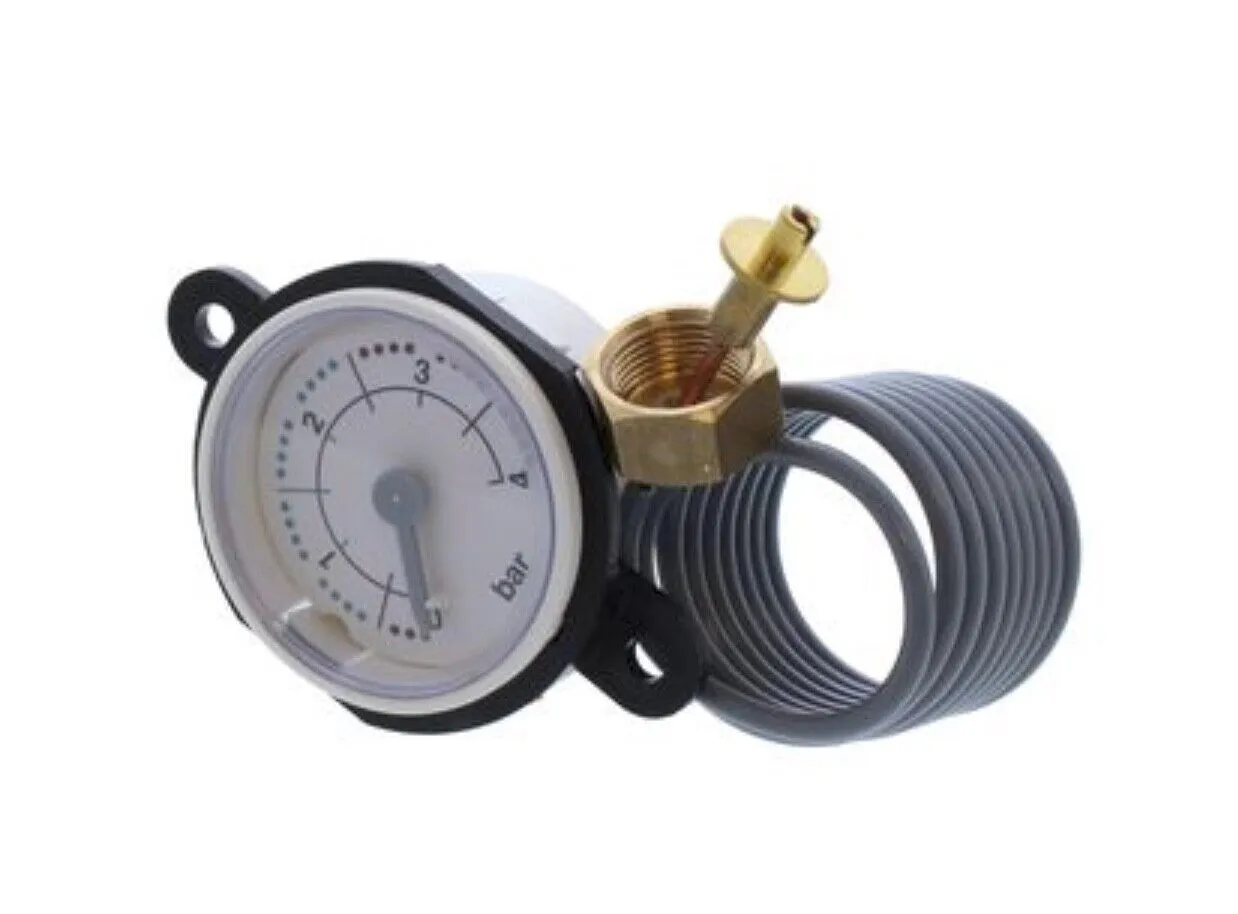
When a combi boiler loses pressure without an obvious leak, the cause is often internal. This guide examines the precise components and diagnostic methods to identify the fault.
The Internal Hydraulic Circuit: A Systems Analysis
When a combi boiler is losing pressure and no leak is found on the external pipework or radiators, the fault lies within the boiler's sealed internal hydraulic circuit. Our diagnostic approach treats the boiler as a closed system. The pressure is maintained by a balance between the filling loop (when manually repressurised), the expansion vessel, and the integrity of internal components. A pressure drop indicates a breach in this sealed system, but one that often vents externally only during operation or in a way that evaporates instantly, leaving no trace.
Primary Suspects: The Expansion Vessel and Pressure Relief Valve
The two most common culprits are the expansion vessel and the pressure relief valve (PRV). The expansion vessel, a diaphragm-separated air chamber, compensates for thermal expansion of water. If its air charge is lost or the diaphragm fails, system pressure fluctuates wildly and often vents via the PRV. The PRV itself is a safety device that opens at a set pressure. A weakened or fouled valve can weep or discharge intermittently, often through an external discharge pipe (the 'tundish'). This water can evaporate quickly or go unnoticed, explaining the 'no leak' scenario. Our engineers use manifold gauges to test vessel pre-charge and monitor system pressure under static and heating cycles to confirm.
Other internal components require inspection. A failed heat exchanger can have a micro-fracture that opens under thermal stress, allowing water to pass into the combustion chamber and vaporise. Similarly, a faulty automatic air vent may release water vapour along with air. Pinpointing these requires methodical isolation and pressure testing of sub-sections, often using electronic leak detection equipment capable of sensing the ultrasonic frequencies emitted by very small, pressurised escapes, even those that manifest as steam.
Diagnostic Protocol and Precision Tools
Our methodology moves from general to specific. We first confirm the pressure drop with a calibrated gauge over a defined period, ruling out minor fluctuations. We then isolate the boiler from the heating system to determine if the fault is within the appliance or the wider pipework. Internally, we test the expansion vessel's pre-charge with a dedicated vessel probe. We inspect the PRV discharge pipe and use bagging or taping methods to catch minute discharges. For elusive leaks, we may employ a thermal imaging camera to identify atypical cooling from evaporating water or pressurise the isolated heat exchanger with nitrogen, monitoring for a drop. This technical, component-level approach is essential for landlords and facilities managers to achieve a durable repair, not just a temporary repressurisation.
Ultimately, a 'no leak found' pressure loss is a diagnostic challenge requiring an understanding of transient and operational leak paths. It underscores why a standard visual inspection is insufficient. Precise tooling and a systematic analysis of the internal hydraulic circuit are required to identify the failing component, ensuring the system's long-term integrity and safety compliance, which is paramount for commercial and rental properties.
Frequently asked questions
Can a combi boiler lose pressure without a leak?
Yes, but it always indicates a fault within the sealed system. The 'leak' is often internal or manifests as an intermittent discharge from a safety valve like the Pressure Relief Valve (PRV), where water evaporates or drains away unseen. The system pressure is escaping from its intended circuit.
What is the most likely cause if the expansion vessel is faulty?
A failed expansion vessel diaphragm or lost air charge cannot absorb the expanded water as it heats. This causes system pressure to spike rapidly during the heating cycle, triggering the Pressure Relief Valve (PRV) to open and discharge water. This cycle repeats, causing a net pressure loss each time the boiler cools.
What diagnostic tools do you use for these internal faults?
We employ a suite of precision tools: calibrated pressure gauges for accurate monitoring, a vessel probe to check expansion vessel pre-charge, thermal imaging cameras to spot evaporative cooling, and ultrasonic leak detectors to locate the high-frequency sound of pressurised escapes from micro-fractures or valve seats, even within the casing.