Advanced Leak Detection in Basements & Cellars: London's Technical Solutions
Detecting leaks in basements and cellars demands specialised, non-invasive technology for accurate, targeted diagnosis without unnecessary disruption to your London property.
The Technical Challenges of Sub-Surface Leak Detection
Leak detection in basements, cellars, and sub-ground floor spaces presents a distinct set of technical challenges for property owners and managers in London. The confined, often inaccessible nature of these areas, combined with the presence of multiple embedded services—from incoming mains water and drainage pipes to underfloor heating and tanking systems—creates a complex diagnostic environment. Traditional inspection methods that rely on visual cues often fail, as water can travel significant distances along pipework, concrete screeds, or membrane layers before manifesting as dampness or pooling. Our approach is therefore grounded in a methodology of precision, employing advanced non-destructive technologies to isolate the exact source and cause of moisture ingress or water loss.
Precision Technologies for Targeted Diagnosis
To navigate the complexities of basement structures, our engineers utilise a suite of complementary diagnostic tools. Acoustic listening devices, including ground microphones and correlation loggers, are fundamental. These instruments detect the high-frequency sound waves generated by water escaping under pressure from pipes embedded in walls or floors. In the acoustically dampened environment of a cellar, sophisticated filtering software is used to distinguish leak noise from background interference, allowing for precise triangulation.
Thermal imaging cameras provide a critical visual dimension to the investigation. By mapping subtle temperature differences across surfaces, they can reveal the thermal signature of damp patches, cold-water ingress, or the path of underfloor heating leaks behind walls or beneath finishes. This is particularly effective for identifying leaks in tanking membranes or within insulated pipe ducts where visual inspection is impossible.
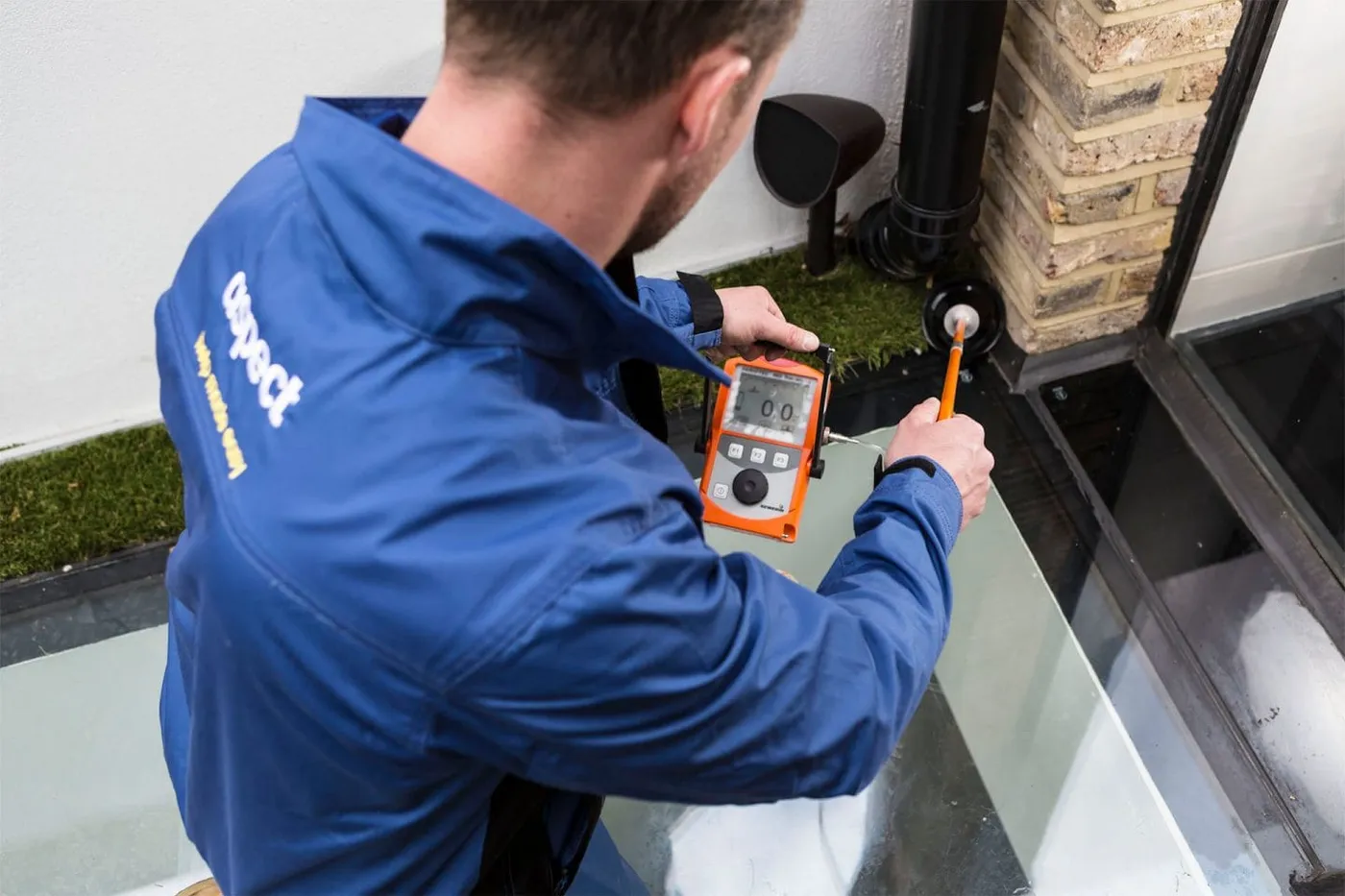
For the most complex or pressurised scenarios, such as leaks in pressurised heating pipes or within dense concrete substrates, tracer gas detection represents the pinnacle of precision. An inert, non-toxic hydrogen-based gas is introduced into the pipe system. Using highly sensitive gas detectors, our engineers can trace the exact path of the gas as it escapes through the minutest of fissures, even through concrete, providing unequivocal proof of a leak's location without any excavation.
Systematic Approach for Landlords & Commercial Properties
For landlords and commercial property managers, a systematic, evidence-based approach is not merely beneficial—it is essential for minimising tenant disruption, controlling repair costs, and preserving asset integrity. Our process begins with a detailed assessment of the building's plans and service layouts, where available. We then employ a logical progression of technologies, typically starting with non-invasive moisture mapping and acoustic surveys to narrow the search field, before deploying thermal imaging or tracer gas for definitive pinpointing.
This methodology ensures that any subsequent remedial work is surgically targeted. Instead of speculative excavation or widespread removal of finishes, repairs can be confined to a precise area, significantly reducing reinstatement costs and downtime. For commercial basements used for storage, IT infrastructure, or plant rooms, this precision is critical to business continuity. We provide clear, technically detailed reports that document the diagnostic process, evidence gathered, and the exact location of the fault, serving as a valuable record for property maintenance files and any necessary insurance claims.
Ultimately, effective leak detection in London's basements is an exercise in technical specificity. By foregrounding advanced detection methods over invasive guesswork, we enable property stakeholders to address water damage with confidence, ensuring repairs are both effective and efficient, and safeguarding the long-term health of the building's substructure.
Frequently asked questions
Why is leak detection in basements more complex than in other parts of a building?
Basements and cellars concentrate multiple embedded services—mains supply, drainage, heating pipes, tanking systems—within dense structural elements like concrete slabs and walls. Water can travel far from the source before appearing, making visual diagnosis unreliable and necessitating specialised electronic detection to pinpoint the exact origin without destruction.
What is tracer gas detection and when is it used?
Tracer gas detection involves introducing a safe, inert hydrogen-based gas into a pressurised pipe system. Using ultra-sensitive detectors, our engineers trace the gas as it escapes through microscopic leaks, even through concrete. It is our most precise method, reserved for locating leaks in pressurised heating pipes, under-screed services, or where other non-invasive methods have been inconclusive.
How does your technical report assist landlords and commercial property managers?
Our report provides a forensic record of the investigation, detailing the technologies used, the diagnostic evidence gathered (including thermal images or acoustic correlation graphs), and the precise coordinates of the leak. This enables targeted, minimal-disruption repairs, supports accurate contractor briefs, and serves as formal documentation for maintenance logs, warranty claims, or insurance purposes.