Central Heating Leak Detection Costs: Why a Sealed System Takes Longer to Trace
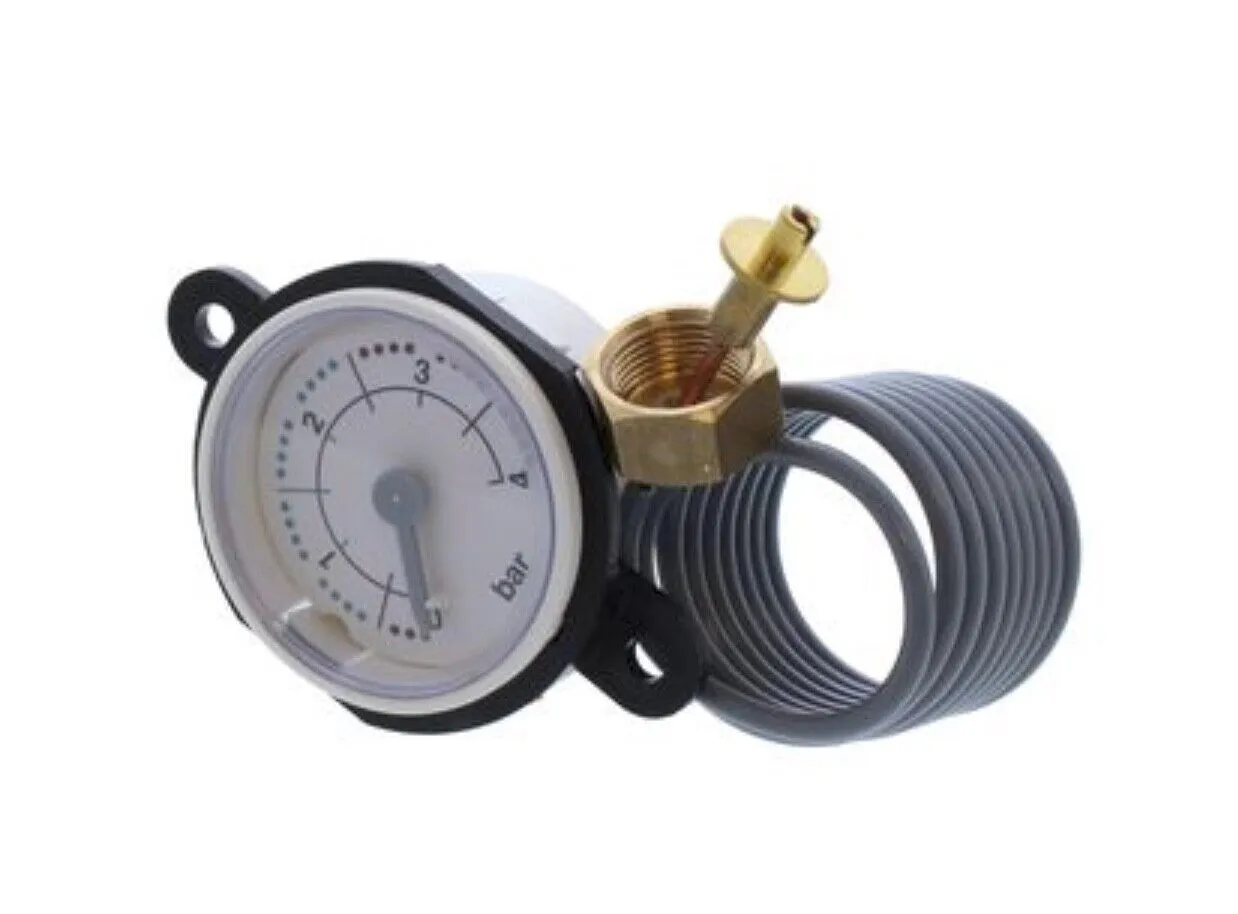
A mains leak starts with a meter reading. A sealed heating circuit gives you a falling gauge and four possible explanations, three of which are not leaks. That difference is most of the difference in price.
Why a heating leak is not priced like a mains leak
A leak on the incoming cold supply is, in pricing terms, the straightforward case. The pipe is under constant pressure from the street and there is a meter on it. Close every outlet, watch the dial over a fixed interval, and you know whether water is being lost before anyone opens a toolbox. That one test costs nothing but time.
A sealed central heating system offers none of that. It is a closed loop holding roughly 1 to 1.5 bar when cold, topped up through a filling loop that should be disconnected in normal use. There is no meter on it. The only reading available at the outset is the pressure gauge on the boiler, and a falling gauge is not a leak. It is a symptom with at least four candidate explanations, three of which involve no escape into the building at all. Work on a mains leak begins with a measurement. Work on a heating leak begins with an argument that has to be settled before any measurement means anything.
The closed loop gives no volume figure
On a mains supply the meter tells you roughly how much water is escaping, and that figure steers everything that follows. A few litres an hour points at a joint or a pinhole; tens of litres an hour points at a fractured run. A heating circuit gives no equivalent number. What you have is a rate of pressure decay, which depends on system volume, the health of the expansion vessel, the water temperature at the reading, and whether anybody bled a radiator that week.
Turning a pressure decay into a useful statement therefore needs a controlled test rather than an observation, and that means the system isolated, stabilised and watched over a known interval. It is the first chargeable hour on almost every heating survey, and it happens before any detection equipment comes out of the van.
The innocent explanations that have to go first
A boiler losing pressure over a week is as likely to have a failed expansion vessel as a leak. When the vessel loses its air charge, the water has nowhere to expand into as it heats, the relief valve lifts and a small volume discharges outside. Nothing is wet indoors, the gauge falls anyway, and a survey that goes straight to thermal imaging finds nothing and still has to be paid for.
The same applies to a relief valve that has picked up debris, to an automatic air vent that is passing, and to a filling loop left connected and quietly refilling the system. That sequence is set out in a combi boiler losing pressure with no leak found, the most common reason a heating job ends without a leak.
The elimination work that comes before detection
A competent heating survey is two jobs in sequence: prove there is a loss, then find it. The first is where a well run survey saves money, because a meaningful proportion of heating enquiries end there with a component fault rather than an escape.
| Test | What it establishes | What it takes off the list |
|---|---|---|
| Meter read over a fixed interval, all outlets closed | Whether the cold supply is losing water | A mains leak presenting as a heating fault |
| Filling loop disconnected, system held at a test pressure | Whether the sealed side holds independently | A filling loop quietly topping the system up |
| Expansion vessel charge checked against system pressure | Whether the vessel can still absorb expansion | Discharge through the pressure relief valve |
| Pressure relief discharge pipe checked outside | Whether water is leaving the building | A leak that does not exist inside the property |
| Moisture readings at surface and at depth | Whether the wetting pattern fits a pressurised escape | Condensation and penetrating damp |
Every line in that table is time, and time is what a detection fee buys. It is also why two quotes for one address can differ by a factor of two without either being dishonest. One has priced the elimination and the report; the other has priced an hour with a thermal camera.
Isolating the system and holding a test pressure
Isolation means closing the valves that separate the heating circuit from everything else, disconnecting the filling loop so the system cannot replenish itself, and bringing the circuit to a known pressure. It then sits, usually cold, and is read at intervals. A circuit that holds for an hour but falls over three days is saying something different from one that drops while you watch it, and that distinction changes which detection method is worth deploying.
Where the property has an older vented arrangement with a feed and expansion tank in the loft, the test changes shape. There is no gauge, so the tank level and float valve become the instruments and a loss shows as a valve that keeps admitting water. Vented layouts remain common enough in London that a survey must establish which it faces before scoping.
What makes a heating survey short and what makes it long
Once a genuine loss is established, the length of the job is decided almost entirely by where the pipework runs and what sits on top of it.
| Variable | Short job | Long job |
|---|---|---|
| Circuit isolation | Zone valves allow the system to be split into halves and quarters | One undivided loop, so nothing narrows by elimination |
| Pipe run | Surface clipped, in a service void, or under floorboards that lift | Buried in screed, chased into walls, or under a poured slab |
| Floor construction | Suspended timber with a void that carries sound and heat | Deep insulated screed under stone, which flattens the thermal signal |
| System type | Sealed, with a working gauge and a clear decay rate | Vented, or sealed with a failed vessel confusing every reading |
| Occupancy and noise | Quiet property where acoustic work is usable | Tenanted flat, or plant noise carrying through the structure |
The variable a client most often controls is the first. A system with working zone valves can be halved, then halved again, and a leak that would take a day on an undivided loop narrows to one zone inside an hour. Without isolation, the survey must treat every metre as a candidate, and the price reflects that.
Underfloor loops are a different job again
Underfloor heating changes the method rather than simply the difficulty. The pipe is continuous plastic buried in screed, with no joints along the loop to fail. Most underfloor failures are therefore mechanical damage from a fixing driven through the pipe during later work, or a failure at the manifold, which is where the joints are. Finding one takes two instruments, in a fixed order.
Thermal imaging maps the loop before anything else
Running the floor warm and imaging it gives you the pipe layout, which is the thing nobody has drawings for. Occasionally it shows the escape directly as a warm blur sitting off the pattern. More often it does the less glamorous job of establishing where the pipe is not, so the next stage is aimed rather than exploratory. Where the screed is deep, well insulated and covered with stone, the signal smears and the map is approximate, which is the case that adds hours.
Tracer gas finishes what thermal starts
Tracer gas is a hydrogen and nitrogen mixture introduced into the drained loop. It migrates up through screed and floor covering and is picked up at the surface with a probe. It converts a warm area into a marked point a repair can be aimed at. It also carries its own cost line, because the loop has to be drained, charged, surveyed, then refilled and recommissioned. Our underfloor heating leak detection page sets out that sequence.
Isolating loop by loop at the manifold
The cheapest thing anyone can do on an underfloor job is close the manifold ports one at a time and watch which loop loses pressure. A manifold with individual isolation on flow and return turns a whole floor survey into a single loop survey. One boxed in behind fitted joinery that nobody can open has the opposite effect. In practice this is the difference between a morning and a full day.
What the published market rates actually say
We do not publish our own detection fee on a blog page, because a figure quoted without the property in front of you is a guess dressed up as information. What can usefully be stated is what independent directories publish.
Checkatrade's water leak detection cost guide gives an average of £162, a typical range of £115 to £234, and a full spread across recorded jobs of £80 to £1,600. It puts hourly rates at £95 to £145 and an emergency call out at £100 to £120, and notes that most tests take around half a day but a leak under concrete can take longer. Its underfloor heating cost guide puts pipework leak repairs from around £300, rising where flooring is lifted and relaid.
| Published figure | Source | What it is actually measuring |
|---|---|---|
| £162 average, £115 to £234 typical | Checkatrade leak detection guide | A national midpoint, weighted towards accessible jobs |
| £80 to £1,600 full spread | Checkatrade leak detection guide | The range once buried and sealed system jobs enter the sample |
| £95 to £145 per hour | Checkatrade leak detection guide | Time based work, which an undivided heating loop becomes |
| £100 to £120 emergency call out | Checkatrade leak detection guide | Attendance outside normal hours, before detection begins |
| Underfloor pipework repairs from around £300 | Checkatrade underfloor heating guide | Repair and reinstatement, a separate line from detection |
Two things follow. The widely repeated claim that leak detection costs about £500 on average in the UK does not match any published average we have been able to find, and should be treated as folklore rather than a benchmark. And a national average is the least useful figure in the set for a London heating job, because that dataset is dominated by accessible mains leaks in houses, which is exactly what a sealed circuit under a screed floor is not.
What the survey produces, and why that affects the price
The output of a heating survey is not a phone call saying the leak is somewhere under the hall. It is a document, and that document is much of what separates a cheap search from a survey worth paying for. At minimum it records:
- The system type, the pressure it was tested at, and the decay observed against the interval.
- Which components were eliminated, and on what reading. A vessel checked and found sound is a finding, not a blank.
- Which detection methods were used, in what order, and why the survey moved from one to the next.
- The location of the escape, stated against something measurable from a fixed datum rather than from furniture.
- The access required to reach it, and the reinstatement that follows, itemised separately from detection.
Where a third party is involved, the document must state cause as well as origin, a separate and harder finding set out in the leak report a landlord or managing agent can actually use. For a freeholder, an agent or an insurer this decides whether the fee is recoverable: a report documenting method and readings supports a trace and access claim, while an invoice saying leak detection does not.
Why repair is quoted separately from detection
Detection and repair are different jobs with different risk profiles, and quoting them as one figure means pricing an unknown. Until the escape is located, nobody knows whether the repair is a joint remade behind a lifted board or buried pipe in screed under stone. A combined number has to assume the worse case, so every client with the easy case pays for the possibility of the hard one. There is also a third line people forget: recommissioning.
| Cost line | What it covers | When it can honestly be quoted |
|---|---|---|
| Detection | Elimination, testing, location and the written report | Before the visit, from system type, floor and access |
| Access | Lifting covering, cutting screed, removing boxing or ceiling | Once the escape has been located and marked |
| Repair | The pipe, joint or fitting itself | Once the pipe is exposed and the failure mode is visible |
| Recommissioning | Refilling, venting, rebalancing, dosing and repressurising | Once the repair is complete |
| Reinstatement | Screed, floor finish, plaster and decoration | Usually a separate trade, priced separately again |
Recommissioning matters more than its size suggests. A system drained and refilled has lost its corrosion inhibitor, and running it unprotected is how the next generation of pinhole failures starts. Refilling also brings the filling loop back into use, a backflow risk point governed by the Water Supply (Water Fittings) Regulations 1999, which is why it should be disconnected again once the pressure is correct.
How to brief the job so the quote means something
Most of the variance between heating detection quotes comes from missing information rather than differing rates. Five facts, given on the phone, move a quote from a guess to a figure that will survive contact with the property.
- System type: sealed with a gauge, or vented with a loft tank. A photograph of the boiler and the loft settles it.
- How fast the pressure falls: from what figure, to what figure, over how many days, and whether anyone topped it up.
- Floor construction over the suspect area, and the covering laid over it.
- Whether there is underfloor heating, where the manifold sits, and whether each loop isolates individually.
- Whether the system has zone valves, and whether anything has already been isolated or drained.
Two further points are worth raising before anyone attends. Whether the property is tenanted, because notice periods change the shape and sometimes the number of visits. And whether a report is needed for an insurer or managing agent, because writing to evidential standard is work and should be priced rather than assumed.
Our own fee for a heating survey is fixed, agreed before we travel, and quoted separately from any repair. What we will not do is publish a number on a page that has never seen your property. If you want the basis rather than a figure, our pricing page explains how a survey is scoped and our central heating leak detection service sets out what a visit covers. If you would rather work through the diagnostics yourself first, the order the tests go in is the sequence we follow on site.
How we help with this
If the article describes a problem you actually have, these are the visits that deal with it.
- central heating leak detection
For a boiler losing pressure or a circuit that will not hold.
- how our pricing works
What sets the fee for a survey, and what is confirmed before we travel.
- leak detection in London
Finding a hidden leak without opening the property up first.
Frequently asked questions
Why does finding a central heating leak cost more than finding a mains leak?
Because a sealed heating circuit has no meter. On the cold supply you can close every outlet, read the meter over a fixed interval and establish whether water is being lost before any equipment comes out. A heating system gives you only a boiler gauge, and a falling gauge has several possible causes that are not leaks, including a failed expansion vessel, a pressure relief valve that no longer seats and a filling loop left connected. Those have to be eliminated under a controlled test first, and that elimination is chargeable time.
What makes a heating leak survey short rather than long?
Three things, and the first is the one you can influence. A system with working zone valves can be split into halves and quarters, so a leak can be narrowed to one circuit quickly, while an undivided loop forces the survey to treat every metre as a candidate. The second is whether the pipe run is reachable under floorboards or buried in screed. The third is floor construction, because deep insulated screed under a stone finish blurs the thermal image and pushes the job towards tracer gas.
Why does underfloor heating need two methods instead of one?
Thermal imaging and tracer gas do different jobs. Imaging a warm floor reveals the loop layout that nobody has drawings for, and sometimes shows the escape as a warm area sitting off the pattern, but in deep or insulated screed the signal smears and the result is approximate. Tracer gas, a hydrogen and nitrogen mixture introduced into the drained loop, migrates to the surface and converts that approximate area into a marked point. The gas stage also requires draining, charging and later refilling, which is a separate cost line.
What do published guides say leak detection costs in the UK?
Checkatrade's water leak detection cost guide gives an average of 162 pounds, a typical range of 115 to 234 pounds and a full spread across recorded jobs of 80 to 1,600 pounds. It puts hourly rates at 95 to 145 pounds and an emergency call out at 100 to 120 pounds. Those are national figures weighted towards accessible jobs, so they describe the market rather than any particular London heating survey, and the frequently repeated claim of a 500 pound national average does not match them.
Why is the repair quoted separately from the detection?
Because until the escape is located nobody knows what the repair is. It could be a joint remade behind a lifted floorboard, or a buried section of pipe in screed under a stone floor. A single combined figure would have to price the worse case, so every client with a straightforward repair would be subsidising the possibility of a difficult one. On a heating system there is also recommissioning to account for: refilling, venting, rebalancing and dosing the system with inhibitor after it has been drained.
What should I have ready before asking for a quote?
Five details do most of the work. Whether the system is sealed with a gauge or vented with a loft tank. How far the pressure falls, from what figure to what figure, and over how many days. The floor construction over the suspect area and the covering on it. Whether there is underfloor heating, where its manifold sits and whether each loop isolates individually. And whether the system has zone valves. Add whether the property is tenanted and whether a report is needed for an insurer or managing agent.