Trace and Access Insurance Cover Explained for Landlords & Property Managers
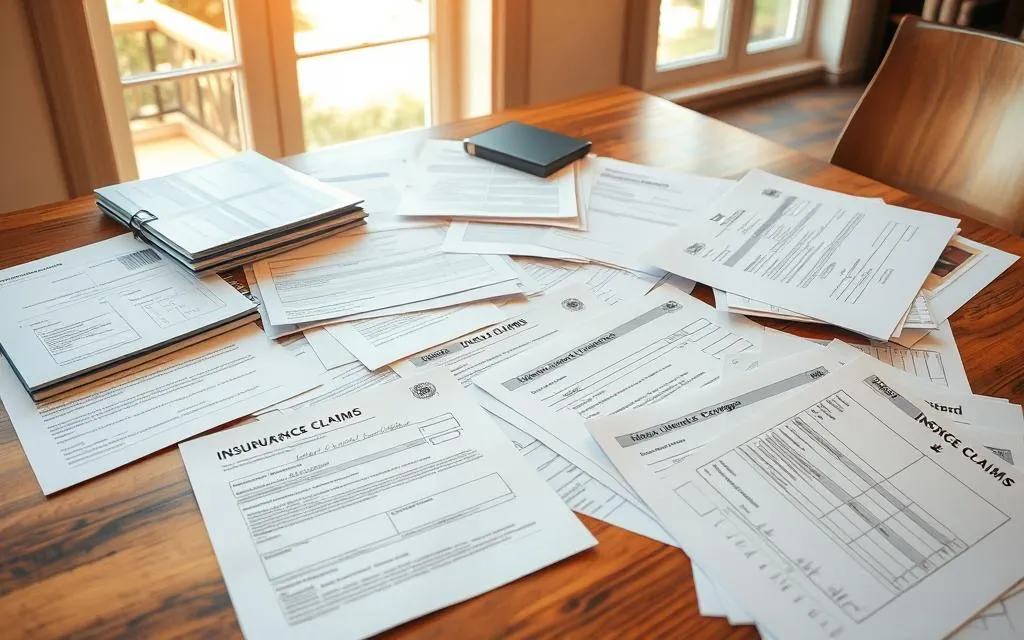
This guide explains the technical relationship between specialist leak detection and successful trace and access insurance claims, detailing required methodologies and documentation.
What is Trace and Access Cover?
Within property insurance policies, particularly for commercial portfolios and multi-unit residential buildings, trace and access cover is a specific provision. It is designed to reimburse the costs associated with locating the source of a water leak, not merely the subsequent repair. This is a critical distinction. The cover typically applies to the investigative work required to pinpoint the exact origin of a leak that is not readily apparent, necessitating a systematic, technical search within the fabric of the building.
From our perspective as leak detection specialists, successful claims under this provision are intrinsically linked to the precision and methodology of the investigation. Insurers require evidence that the leak was concealed and that the methods used to locate it were necessary, systematic, and justified. Our engineers approach every investigation with this evidential requirement in mind, employing a logical escalation of non-invasive and minimally invasive technologies.
The Technical Link to Leak Detection Methodology
A successful trace and access claim hinges on proving that the leak's source was not identifiable through simple visual inspection. Our standard operating procedure aligns perfectly with this requirement. We begin with a thorough visual assessment and moisture mapping, but the core of the claim rests on the deployment of diagnostic technologies. These are the tools that formally constitute 'trace and access' work.
We utilise acoustic leak detection to pinpoint the precise sound signature of water escaping under pressure from pipes within walls or slabs. Thermal imaging cameras are deployed to identify anomalous temperature gradients caused by moisture, often revealing the path of a leak behind surfaces. Tracer gas detection, where an inert gas is introduced into a pipe system, allows us to locate even the smallest breaches with high accuracy as the gas escapes at the leak point and is detected at the surface. Each technology provides a layer of objective, documented data.
The progression from one technique to another is documented in a detailed report, creating a narrative that demonstrates a necessary and logical investigative path. This report is the primary document an insurer's loss adjuster will review. It must clearly state why initial inspection failed, which technologies were deployed, the diagnostic data they provided, and the conclusive evidence they yielded to justify the final, invasive access point.
Documentation for Claims: A Technical Report
The final deliverable for any trace and access investigation is not just a located leak, but a comprehensive technical report. This report serves as the forensic evidence for your insurance claim. Our documentation includes a chronological log of activities, annotated photographs and thermograms, readings from diagnostic equipment, and a clear statement on the necessity of each step.
We detail the exact location of the leak, often with schematic diagrams, and specify the construction layers that were investigated (e.g., 'within the screed of the suspended concrete floor slab'). This level of specificity is crucial. It moves the claim from a generic 'leak found' to a demonstrably complex investigation that required specialist skills and equipment. For landlords and commercial property managers, this rigorous documentation streamlines the claims process, minimises disputes, and ensures the investigative costs are correctly attributed under the trace and access provision, preserving the main repair coverage for the actual restoration work.
Frequently asked questions
Does trace and access cover the cost of the actual repair?
No, that is a critical distinction. Trace and access cover is specifically for the costs incurred in locating the concealed source of the leak. The physical repair of the pipe, wall, or floor is typically claimed under the main 'escape of water' section of your policy. Our technical report provides the evidence needed to separate these two cost centres for your insurer.
What methods qualify for a trace and access claim?
Insurers require methods that go beyond basic inspection. Qualifying techniques include systematic electronic leak detection (acoustic correlators, ground microphones), thermal imaging surveys, tracer gas detection, and strategic moisture mapping using calibrated meters. The key is the report must justify why each method was necessary based on the leak's concealment. Simple visual identification rarely qualifies.
As a landlord, what should I do first if I suspect a concealed leak?
First, mitigate any immediate water damage to prevent further loss. Then, engage a specialist leak detection company that understands insurance evidence requirements. Avoid instructing a general plumber to start breaking open floors or walls at random, as this can invalidate a trace and access claim by damaging evidence and appearing non-systematic. A precise, documented investigation protects your claim.