Identifying & Repairing Soil Stack and Waste Pipe Leaks in Flats
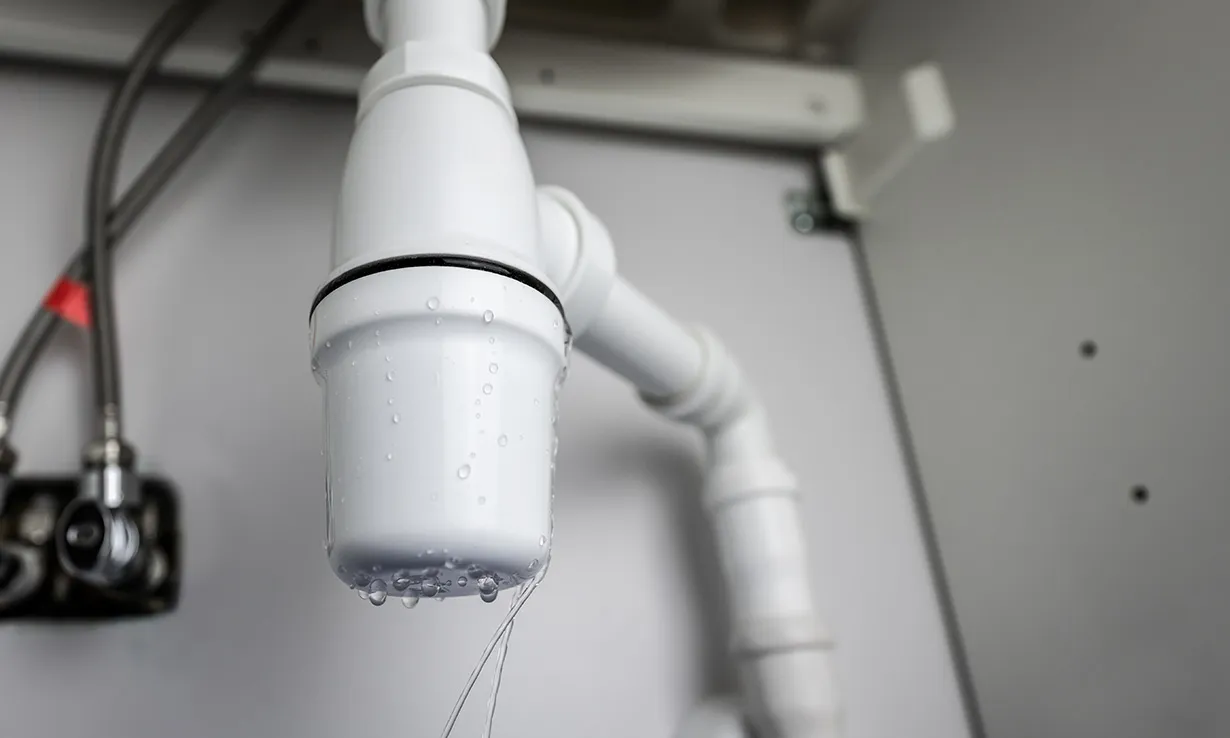
We detail the precise detection methods, from CCTV drain surveys to acoustic listening, used to locate and repair leaks in soil stacks and waste pipes within flats and apartment buildings.
Precision Diagnostics for Concealed Pipework
Leaks within soil stacks and shared waste pipes in multi-occupancy buildings present a distinct technical challenge. Unlike isolated supply lines, these vertical and horizontal waste systems are often concealed within ducts, walls, or floor voids, and a single leak can affect multiple units. Our diagnostic approach prioritises non-invasive precision to minimise disruption for landlords and managing agents. We begin with a detailed visual inspection of all accessible sections, looking for signs of moisture ingress, corrosion, or structural staining that may indicate a breach in the pipe integrity.
For the majority of investigations, our primary tool is a high-resolution CCTV drain survey. We deploy a flexible, articulating camera probe directly into the pipe system. This provides a real-time visual inspection of the internal condition, allowing our engineers to pinpoint the exact location and nature of a defect, such as a cracked collar, failed seal, or root intrusion. The footage is recorded and geolocated, providing unequivocal evidence for repair planning and liability assessment. This method is indispensable for differentiating between a simple joint failure and a more systemic issue requiring section replacement.
Advanced Acoustic and Tracer Gas Detection
In scenarios where visual access is impossible or the leak is suspected to be exceptionally small, we employ complementary acoustic listening devices. These highly sensitive ground microphones and pipe sonde equipment can detect the distinct sound of water escaping under pressure through a crack or faulty joint, even through layers of building material. By mapping sound intensity, we can triangulate the leak's position with high accuracy before any destructive investigation is required.
For the most elusive leaks, particularly where wastewater is not under constant pressure, we may utilise tracer gas detection. An inert, non-toxic gas is introduced into the dry pipework. Our engineers then use a sensitive gas sniffer probe along the suspected route. The gas, being lighter than air, will escape at the point of the leak and is detected by our equipment, providing a highly precise location. This method is especially effective for pinpointing leaks in complex, buried horizontal waste runs beneath floors.
Repair Strategies for Minimal Disruption
Once precisely located, our repair strategy is dictated by the fault's nature and location. For accessible joint failures or minor cracks, we often recommend and execute a resin-based patch repair, applied internally via the CCTV camera rig. This creates a seamless, structural seal without excavation. For more significant damage, such as a fractured pipe section within a duct, a traditional cut-and-replace operation is necessary. Our engineers coordinate closely with building management to schedule work during low-occupancy periods, using sector valves where possible to isolate systems and limit service interruption to a minimum number of flats.
For landlords and commercial property managers, the critical factor is a definitive diagnosis and a durable repair. Our technical reports provide clear imagery and findings, enabling informed decision-making for insurance claims and long-term maintenance planning. By combining CCTV survey data with acoustic or gas detection, we eliminate guesswork, ensuring the repair is targeted, effective, and cost-efficient in the long term by preventing recurring damp, structural damage, and tenant complaints.
Frequently asked questions
What are the most common signs of a soil stack leak in a flat?
Key indicators include persistent damp patches or water staining on walls or ceilings adjacent to waste ducts, unexplained musty odours, gurgling sounds from drains, and in severe cases, visible wastewater seepage. These symptoms often manifest in lower flats first from leaks in upper floor pipework.
Can you locate a leak without breaking into walls or floors?
Yes, in most cases. Our primary method is a CCTV drain survey, which visually inspects the pipe interior without any damage. For non-visual leaks, we use acoustic listening equipment or tracer gas detection to pinpoint the exact location through building materials, allowing for a targeted, minimally invasive repair.
Who is responsible for repairing a leak in a shared soil stack?
Typically, the freeholder or managing agent of the building is responsible for the repair of shared drainage infrastructure, such as the main soil stack and lateral waste pipes serving multiple units. Our detailed technical report provides the evidence required to accurately assign liability and scope the necessary work.