How to Find a Water Leak Under a Floor: A Guide to Detection Methods
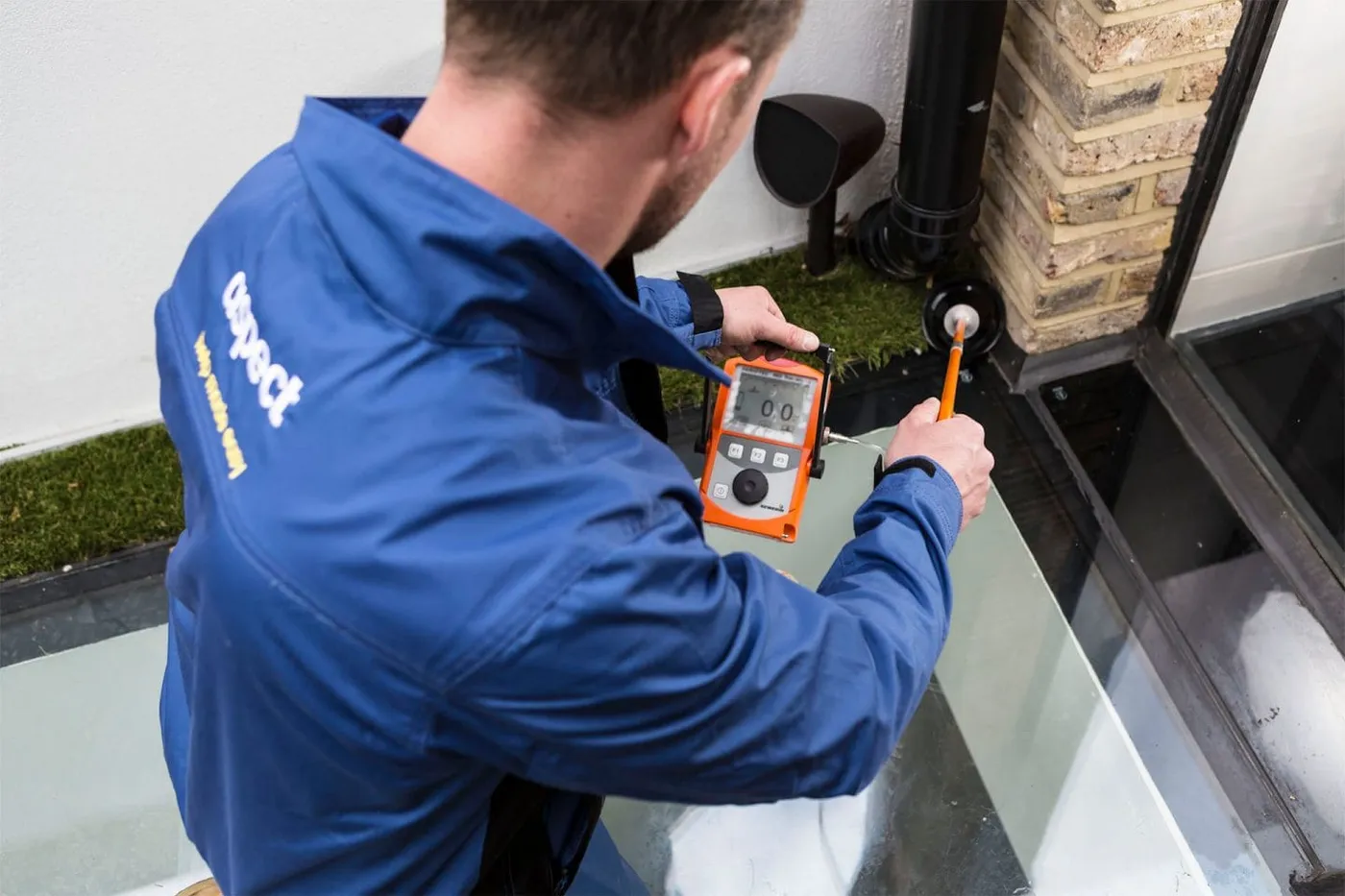
This guide details the technical methods our engineers use to locate hidden water leaks beneath floors, focusing on acoustic, thermal, and tracer gas detection.
The Challenge of Sub-Floor Leak Detection
Locating a water leak concealed beneath a floor is a precise technical challenge. Direct observation is impossible, and the symptoms—such as damp patches, unexplained increases in water usage, or structural softening—only confirm a problem exists, not its source. For landlords and commercial property managers, a swift and accurate diagnosis is critical to prevent extensive damage and costly repairs. Our approach relies on specialised detection technologies that pinpoint leaks without unnecessary disruption to the structure or tenants.
Primary Detection Methodologies
Our engineers employ a hierarchy of non-invasive techniques, selecting the most appropriate based on the floor construction and pipe material. The first step is typically an acoustic listening survey. Using highly sensitive ground microphones and electronic listening discs, technicians scan the floor area. Under pressure, a escaping water jet creates a distinct frequency. Our equipment amplifies this sound, allowing us to trace its peak intensity to the leak's epicentre, a process particularly effective on solid concrete slabs with accessible pipework.
For leaks that do not produce a clear acoustic signature, or where pipes are deeply embedded, we turn to thermal imaging cameras. These devices detect minute temperature variations on the floor surface. Escaping water alters the thermal mass and conductivity of the subfloor materials, creating a thermal anomaly visible on the camera's display. This method is highly effective for identifying the wetting pattern and potential leak path under screeds or timber floors, though ambient conditions must be accounted for in the analysis.
When acoustic and thermal methods are inconclusive, the application of tracer gas provides definitive confirmation. We introduce a safe, inert hydrogen-nitrogen mix into the water system. This gas, which is highly mobile and non-toxic, escapes at the leak point and permeates up through the floor structure. Using a sensitive gas detection probe, our engineers can trace the precise exit point with high accuracy, even through multiple layers of construction. This is often the final step in a complex diagnosis.
Post-Detection Protocol and Precision Repair
Once the leak location is confirmed, our goal is to execute a minimal-access repair. Precise location data allows for a targeted excavation, whether it's a single tile lifted, a small section of floorboard cut, or a pinpoint opening in a concrete slab. This precision minimises restoration work and tenant inconvenience. Following the repair, we conduct a pressure test to confirm the integrity of the fix and can utilise thermal imaging again to verify that the anomalous wetting pattern is drying, providing documented evidence of a successful resolution for property records.
Relying on a methodical, technology-driven process is essential for sub-floor leak detection. Guessing or attempting exploratory openings often leads to greater damage and higher costs. Our methodology is designed to deliver certainty, allowing for a repair that is as surgical as the diagnosis itself.
Frequently asked questions
Can thermal imaging always find a leak under the floor?
Thermal imaging is a powerful diagnostic tool, but its effectiveness depends on conditions. It requires a temperature differential between the leaking water and the surrounding floor structure. Slow leaks or leaks where the water temperature matches the ambient temperature may not create a detectable anomaly. It is one part of our diagnostic toolkit, often used in conjunction with other methods.
What is the advantage of using tracer gas over other methods?
Tracer gas offers the highest precision in pinpointing a leak's exact exit point. Because the gas molecules are smaller than water and can travel easily through porous materials like concrete and screed, it is exceptionally effective for deeply buried leaks or complex constructions where other signals are weak. It provides a definitive confirmation, reducing the risk of unnecessary exploratory work.
How do you decide which detection method to use first?
Our initial choice is based on a site survey assessing pipe material, floor construction, and accessible system information. Acoustic listening is typically the first-line, non-invasive check for pressurised systems. If the acoustic signature is poor or the leak is suspected to be very slow, we progress to thermal imaging. Tracer gas is deployed for complex cases or to confirm findings from other methods. The process is sequential and logical to achieve an efficient diagnosis.