A hidden water leak can persist undetected for months or even years, causing progressive structural damage and mould growth before any visible signs appear.
The Variables of Undetected Leak Duration
The duration a hidden water leak can go undetected is not a fixed period but a function of several technical variables. The leak's location, flow rate, and the surrounding materials' permeability are primary factors. A minuscule pinhole leak in a pressurised pipe behind a plasterboard wall may manifest only as a faint damp patch months later, while a slow drip into a concrete subfloor or a suspended ceiling void could remain concealed almost indefinitely. For landlords and commercial property managers, understanding these variables is crucial for risk assessment.
The Progressive Impact of Concealed Moisture
Even before visual evidence emerges, a hidden leak initiates a chain of deterioration. Water migrates through capillary action in porous materials like timber joists and concrete screeds, leading to a loss of structural integrity over time. In cavity walls or under-floor voids, this creates a perfect environment for dry rot and other wood-destroying fungi, which require detailed mycological surveys to diagnose. Furthermore, the constant elevated moisture levels behind finishes provide ideal conditions for mould spore colonisation within the building's air cavity, a health hazard that often precedes any staining on interior surfaces.
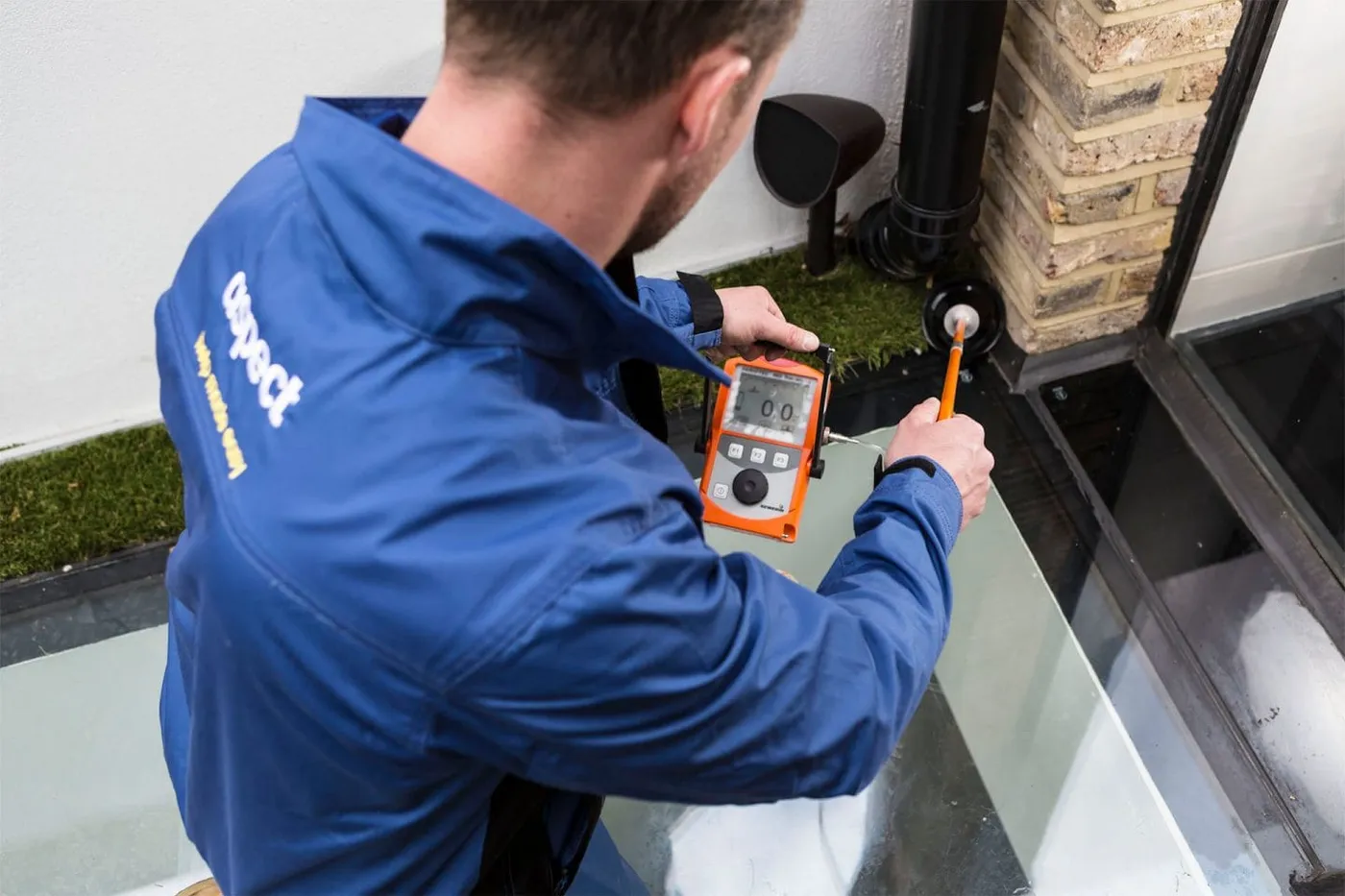
Modern building materials can also mask leaks effectively. Waterproof membranes under tiled wet rooms, tanking systems in basements, and insulated plasterboard can all trap and channel moisture far from the original breach. Our engineers frequently use thermal imaging cameras to identify these anomalous temperature patterns caused by evaporative cooling, and tracer gas detection to pinpoint breaches in complex, sealed systems where water does not freely escape.
Detection Thresholds and Technological Intervention
Leak detection has moved beyond reactive measures. The threshold for detection is now defined by the sensitivity of the technology deployed. Acoustic leak noise correlators can identify the sonic signature of a leak through background interference by analysing sound wave arrival times at multiple sensors. This allows for the pinpointing of leaks under solid floors or deep within walls without intrusive investigation. Similarly, we utilise endoscopic borescopes to visually inspect pipework within ducts and cavities, seeking the first visual confirmation of failure.
For landlords overseeing multi-unit properties or commercial portfolios, this shift is operational. Proactive, scheduled surveys using non-invasive technologies transform leak management from an emergency response into a measurable maintenance metric. It changes the question from 'How long has this been leaking?' to 'What is our acceptable interval for scanning high-risk zones?' This precision-based approach minimises damage escalation and preserves asset value.
Frequently asked questions
What are the most common locations for long-term hidden leaks?
The most common locations include under concrete slab foundations, within heated floor screeds, behind fixed kitchen or bathroom units, inside ceiling voids of commercial premises, and at the joints of underground supply pipes. These areas often lack immediate visual access and can dissipate moisture slowly.
Can smart water meters detect hidden leaks?
Advanced smart meters with continuous flow monitoring can indicate a hidden leak by registering consistent low-level water usage during periods when no water should be flowing, such as overnight. However, they provide a system-level alert, not a precise location. Pinpointing the leak requires the specialist acoustic, thermal, or tracer gas methods our engineers use.
Why is a slow leak often more damaging than a sudden burst?
A slow leak allows for continuous, long-term water ingress, leading to widespread saturation of structural materials, pervasive mould growth within cavities, and corrosion of metal fixings. The damage is often extensive and systemic by the time it's discovered, whereas a burst pipe prompts immediate repair, typically localising the water damage.