Brown Stain on Ceiling: Leak or Damp? A Technical Analysis
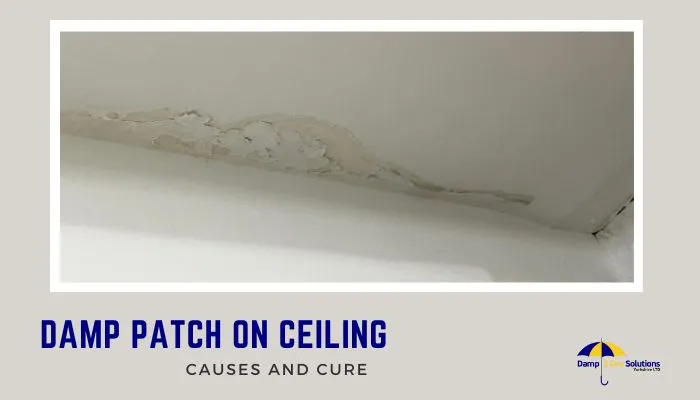
A brown stain on a ceiling can indicate either a water leak or condensation damp. We explain the technical methods used to diagnose the source and severity precisely.
Interpreting the Stain: Key Technical Indicators
A brown or yellowish-brown stain on a ceiling presents an immediate diagnostic challenge. The colour often results from tannins in water leaching from building materials or from mould growth, but the underlying cause requires precise identification. Our engineers approach such stains by first analysing the pattern and location. A leak from a plumbing fixture or pipe above typically creates a more localised, concentrated stain that may darken at its centre. In contrast, a general damp issue, such as condensation or rising moisture, often manifests as a more diffuse, blotchy discolouration, potentially around the perimeter of the ceiling or in corners where airflow is minimal.
We then assess moisture content using non-invasive tools. A professional-grade, penetrating moisture meter provides quantitative data on the water saturation level within the plaster and joists. This reading is critical; a persistently high moisture reading directly beneath a bathroom or kitchen strongly suggests an active leak, whereas a lower, more even reading might point to ambient humidity issues. We also employ thermal imaging cameras to visualise temperature differentials. An active leak often appears as a distinct cold spot on the thermal scan, as evaporating water cools the surface. Condensation patterns, however, may show more generalised cooling across a larger area.
Methodical Leak Detection Versus Damp Diagnosis
If initial indicators point toward a leak, our investigation becomes highly targeted. We systematically isolate potential sources. For properties with accessible plumbing voids, we may use acoustic listening devices to detect the sound of water escaping under pressure from even the smallest pipe fracture. Tracer gas testing is another precise method; we introduce an inert, non-toxic gas into the suspected pipework. Using sensitive gas detectors, we can trace the gas's path as it escapes through the leak, pinpointing its location with accuracy without destructive searching.
When damp is the suspected culprit, the methodology shifts. We assess the property's environmental conditions, including relative humidity and surface temperatures, using data loggers. The goal is to identify dew point conditions where condensation forms. For potential rising damp, we inspect the integrity of the damp-proof course (DPC) and use capacitance meters to map the moisture profile up the wall. A classic signature of rising damp is a 'tide mark' of salts left behind as groundwater evaporates, which can stain adjacent ceilings. Distinguishing this from a leak is essential, as the remediation—involving DPC restoration and wall drying—is fundamentally different from repairing a burst pipe.
For landlords and commercial property managers, this distinction is not academic. Misdiagnosis leads to repeated repairs, tenant dissatisfaction, and progressive structural damage. A leak requires immediate isolation and pipe repair, followed by controlled drying of affected materials. A condensation issue requires a strategy of improved ventilation, insulation, or humidity control. Our technical process is designed to deliver a definitive cause, ensuring the prescribed solution is permanent and cost-effective.
Post-Diagnosis: Verification and Resolution
Following any intervention, verification is key. After a leak repair, we re-test the pipework with pressure tests to confirm integrity. For damp issues, we re-install moisture loggers to monitor the drying process and confirm that environmental modifications are effective. This closed-loop approach ensures the brown stain is not merely covered but that the causative mechanism is fully resolved, protecting the asset's long-term integrity and value.
Frequently asked questions
Can a brown ceiling stain be just old water damage, not an active leak?
Yes. Stains can be residual from a historical, since-repaired leak. However, dormant stains should be dry. Our engineers use deep-reading moisture meters to check for residual moisture within the structure. If the material is dry, the stain is historical. If moisture is present, an active issue persists.
What non-destructive methods do you use to find a leak behind a ceiling?
We primarily use a combination of thermal imaging to identify temperature anomalies from evaporating water and acoustic listening devices to pinpoint the sound of water under pressure escaping a pipe. In complex cases, tracer gas testing provides the highest precision for locating the exact breach point without unnecessary cutting or demolition.
As a landlord, if it's condensation damp, am I responsible for fixing it?
Responsibility often hinges on the property's fixed installations. You are typically responsible for providing adequate ventilation (like extractor fans in bathrooms) and ensuring the property is structurally sound. If condensation arises from tenant lifestyle (e.g., not using provided ventilation), education is key. Our diagnosis provides the technical evidence to clarify the root cause, informing liability and the correct remedial path.